As sure as spring turns into summer, or wish lists for Santa are being made, many parents across the nation will soon give into their children’s pleas and buy a backyard trampoline.
As you might guess, a trampoline is one item that you don’t want to buy second-hand, second-rate or, well, cheap. Considering that your kids and neighborhood children will be bouncing all over it, risking broken bones and bruises, you will want to buy a trampoline that’s first class. If you want to save money, get it from a trusted store when it’s on sale.
But it’s not the price of a trampoline that is likely to destroy your budget. It’s the effect it could have on your homeowner’s insurance. Read on to find out how you can minimize your total costs, including the ones you didn’t expect, when you purchase a trampoline.
The risks of trampolines
In 2018 (the most recent year for which we found statistics), there were more than 300,000 medically treated trampoline injuries. This includes more than 110,000 visits to the emergency room.
That’s why you don’t want to go on Craigslist or to a yard sale to buy a second-hand trampoline, unless, perhaps you know the person well and know what you’re buying is in perfect working order. Even then, do you want to risk your kids’ safety on a piece of equipment that has unknown wear and tear?
Homeowner’s insurance + trampoline = $
Many homeowner’s insurance forms will ask whether you have a trampoline. They see it as a liability risk, and could raise your rates accordingly if you haven’t taken appropriate safety precautions.
The safest course of action is to call your insurance agent before getting a trampoline, to see what effect, if any, your purchase is going to have on your homeowner’s insurance rates. In many cases, according to the experts I’ve talked to, there won’t be an effect — provided you’ve taken certain safety measures.
Your insurance agent is likely going to tell you:
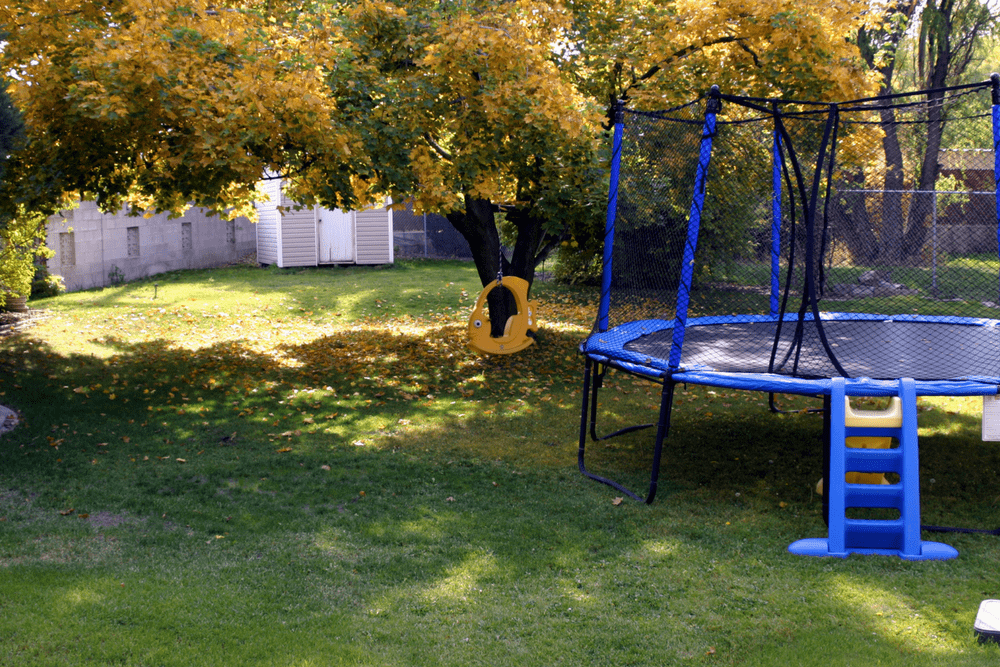
- Your trampoline needs a netting enclosure around it. So if your kid or someone else’s kid goes careening off the trampoline, they’ll be prevented from rocketing into the earth.
- Your trampoline will also need a lock on the opening of the netting. Not that the insurance industry doesn’t like your kids, but they’re really, really worried about the neighborhood children and their litigious parents who may want to sue you for everything you’ve got if you’ve made it easy for their youngster to climb onto your trampoline, unwatched, and bounce into broken-bone oblivion.
- Your trampoline needs to be anchored into the ground. Imagine the fun you’ll have talking to your neighbor if, on a windy day, your trampoline does some bouncing on its own and flies across the yard and into his parked car.
Do all that, and your insurance agent will probably be happy. Not having those precautions in place is how you can get in trouble. If something goes wrong, your insurance might cover you, but the company will certainly then drop you. Alternatively, if your insurance agent comes out to look at hailstorm damage on your roof and spots your unsafe trampoline in the backyard, you could find your rates shooting up, or you might simply lose your insurance.
Will your rates still go up, if you call ahead of time or after a trampoline purchase, and you do everything your insurance company says? It’s certainly possible, but most agents that I’ve spoken to say that your rates aren’t likely to change. They just want your trampoline to be as safe as possible — and who can argue with that?
If you liked this post, you may also like: